
The Critical Lag: Pete Skelton on the Urgent Need for Rehabilitation in Disaster Preparedness

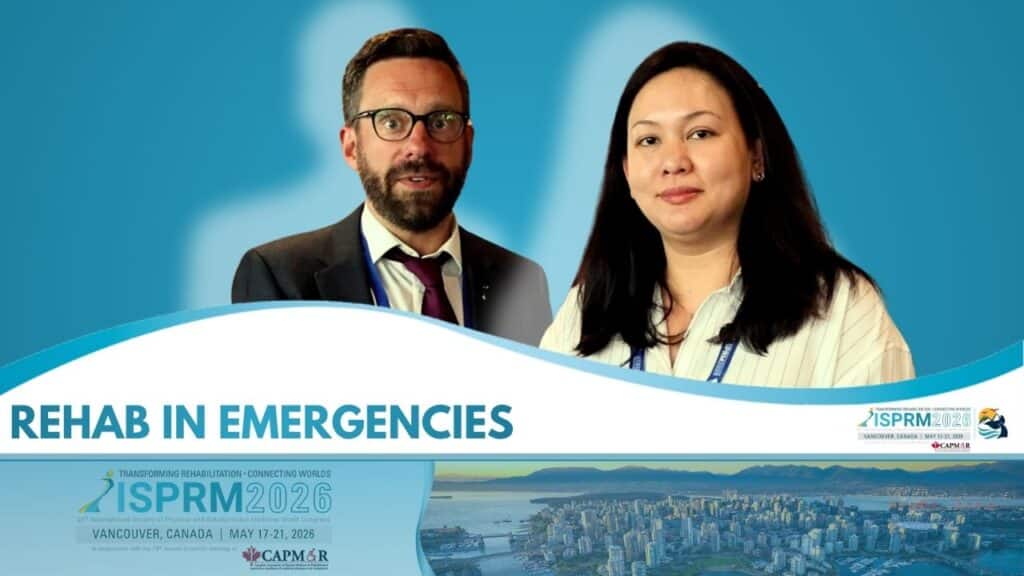
When a natural disaster or mass casualty event strikes, the immediate integration of rehabilitation services is vital to improving patient outcomes and streamlining the overall emergency response. However, systemic exclusion from the planning phase continues to hinder these efforts. This urgent issue was the focus of an interview with Pete Skelton, conducted by Krystal Song of the ISPRM Communications Committee, during the third day of the International Society of Physical and Rehabilitation Medicine (ISPRM) 2026 World Congress.
Following his comprehensive keynote lecture on health systems and emergency preparedness, Skelton addressed the historical barriers facing the specialty. He noted a pervasive «fundamental misunderstanding sometimes of the role of rehabilitation, they see it as something that begins later in the process». Instead, he argued, the paradigm must shift to ensure «early rehabilitation within the acute response. So starting during acute care in the hospital, and then we need a constant chain that runs right the way through».
The primary obstacle, Skelton explained, is a lack of proactive planning. «[A]t the moment because we’re not involved in preparedness, that means we face a lag in terms of how quickly we can get involved in response». He warned against reactionary measures, stating, «We can’t wait for emergencies to hit though because then the chaos is significant».
To combat this, Skelton outlined a four-pillar framework designed to help health systems manage a rapid influx of patients:
- Staff: Ensuring personnel are properly trained and integrated into planning.
- Space: Guaranteeing that rehabilitation facilities are safe and capable of expansion.
- Systems: Implementing robust data tracking to measure functional outcomes as patients move through the continuum of care.
- Supplies: Securing access to necessary equipment and reinforcing supply chains.
Skelton also announced that a dedicated toolkit will be launched later this year to assist individuals and facilities in implementing these steps.
Ultimately, however, Skelton stressed that localized efforts must be supported by systemic authority. When asked for the single most important strategy to change how health systems operate, he pointed to governance. «I think we need leadership», Skelton concluded. «We need rehabilitation leadership to sit within the Ministry of Health when they’re talking about their preparedness and response… But they also critically need to be there sitting in the emergency operations centers when decisions are being made at the beginning of an emergency».
As Skelton highlighted during his overarching presentation, preparing for future conflicts and natural disasters requires a unified, multidisciplinary approach. By securing a seat at the table during the planning phase, rehabilitation professionals can ensure that vital, life-restoring care is delivered efficiently the moment a crisis occurs.
Responses