
Modifying the Trajectory: Dr. Eleftheria Antoniadou on Aging with Disabilities at ISPRM 2026

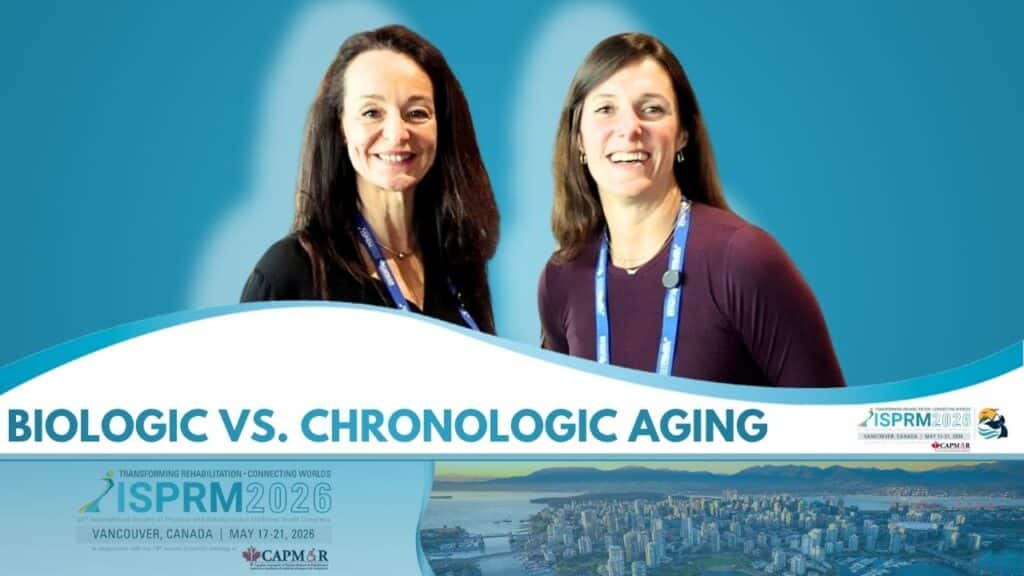
As the global population undergoes a massive demographic shift, physical and rehabilitation medicine physicians find themselves operating increasingly at the intersection of physiatry and geriatrics. The complexities of this transition, and the urgent need to adapt clinical approaches for aging populations, were the central themes of an interview with Dr. Eleftheria Antoniadou, conducted by Franchesca Konig of the ISPRM Communications Committee during the 2026 World Congress.
Following a highly praised lecture on the subject, Dr. Antoniadou outlined the fundamental priorities for treating older adults, particularly those aging with pre-existing disabilities. «Well, this population, for them the most important thing is function», she explained, urging practitioners to rethink their standard assessments. «So you need to use your tools to the older population, adapt them, screen them better, think about aging syndromes, think about the years of compensation, of impairment, of age-related consequences together».
A critical component of this care involves understanding the divergence between biologic and chronologic aging. For individuals with disabilities, physical decline is frequently accelerated. «The impairment opens doors to aging», Dr. Antoniadou noted. «One door opens the other one, and that is driving the deterioration, the decline».
Despite this accelerated biological aging, Dr. Antoniadou offered a highly optimistic clinical outlook, emphasizing that physicians have the power to intervene. «The important thing is that these are trajectories that are modifiable. They are reversible», she stated. Achieving this requires clinicians to «anticipate and to screen and to have a longitudinal approach». By utilizing a comprehensive strategy that includes exercise and nutrition, physiatrists can actively alter a patient’s trajectory and restore their quality of life.
Looking toward the next two decades, Dr. Antoniadou expressed concern over current global readiness. As she established during her preceding presentation, healthcare systems are fundamentally unprepared for the incoming aging demographic. Addressing this impending crisis will require a massive expansion in clinical research and a commitment to collaborative, patient-centered care.
Clinicians must continuously consult their patients to understand their specific, functional needs, rather than relying on standardized clinical assumptions. «We don’t need to restore maybe a perfect joint, but we need to restore perfect function for them to give them quality», she concluded. By prioritizing functional independence over anatomical perfection, the global rehabilitation community can successfully guide vulnerable populations through the complexities of the aging process.
Responses