
Extending the Window: Dr. Mark Bayley on the Future of Stroke Rehabilitation at ISPRM 2026

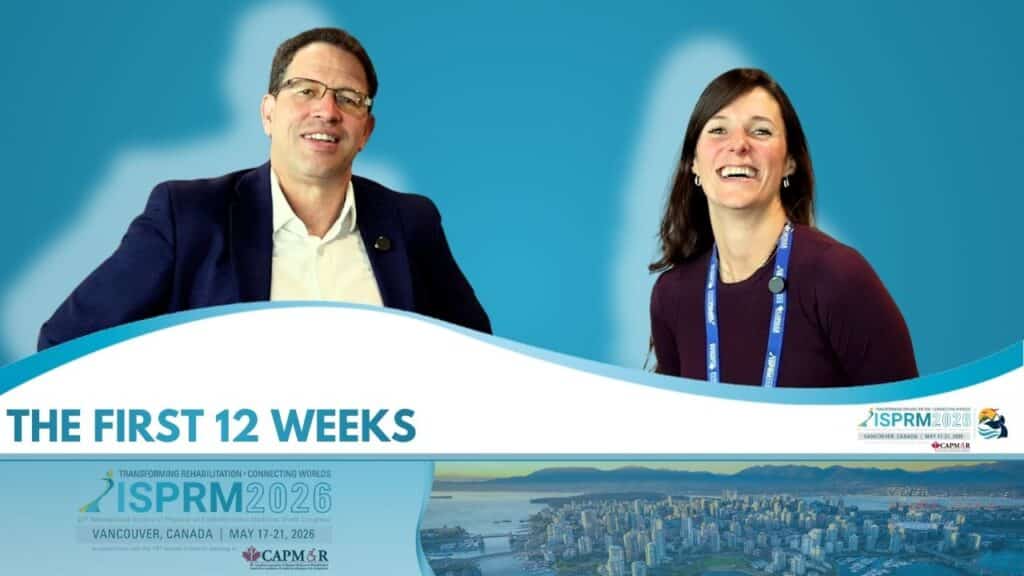
The first 12 weeks following a stroke represent a highly critical window for neurological recovery, demanding targeted and intensive exercise regimens. The nuances of this period, and the clinical strategies required to maximize it, were the focus of a compelling interview with Dr. Mark Bayley, conducted by Franchesca König of the ISPRM Communications Committee during the International Society of Physical and Rehabilitation Medicine (ISPRM) 2026 World Congress.
Following his well-received lecture, Dr. Bayley broke down the essential components of early stroke rehabilitation. «[I]t’s the first 12 weeks that we really want to see people getting their interventions», he stated. For upper extremity issues, he pointed to constraint-induced movement therapy, mirror therapy, electrical stimulation, and mental imagery. For lower extremity challenges, the focus shifts to core strength and task-specific training.
However, Dr. Bayley emphasized that «a key thing is aerobic exercise», acknowledging a significant clinical hurdle for many practitioners: «that’s sometimes really hard for stroke patients to actually get their heart rate into the right range». Overcoming barriers such as physical fatigue and pain requires innovative, adaptable programming that does not rely strictly on traditional mobility.
To facilitate long-term adherence and safely elevate patient heart rates, Dr. Bayley highlighted current clinical research, including a study led by his colleague, Dr. Janice Eng, known as V-PACES (Virtual Physical Activity Seated Exercise). «The idea is that we really get people into the aerobic range with the seated exercise», he explained. Utilizing specialized adaptive equipment allows clinicians to safely circumvent mobility barriers and achieve vital cardiovascular training without exhausting the patient.
Looking toward the future of the specialty, Dr. Bayley expressed profound optimism regarding the biological limits of recovery. Currently, «it seems like after 12 weeks, the brain becomes less able to change». The next frontier of research lies in disrupting that rigid timeline. «[I]f we could find medications or biological or stimulation paradigms that would actually change the paradigm of the brain, I think we can open up the window so that we could do a lot more with rehabilitation», he revealed.
As Dr. Bayley established during his overarching presentation, unlocking this extended window of neuroplasticity represents a monumental shift in stroke care. By combining these emerging biological paradigms with rigorous, adaptive aerobic exercise models, physical and rehabilitation medicine professionals are actively forging a future where significant neurological recovery can continue long past the initial 12-week benchmark.
Responses