
Breaking the Glass Ceiling: Dr. John Chae on the Future of Neuromodulation and AI

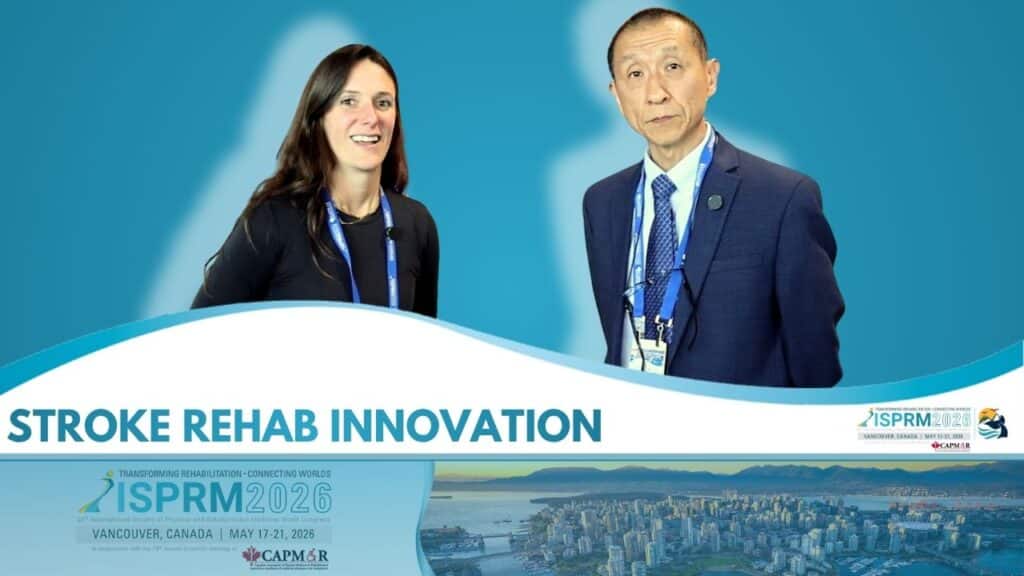
Neuromodulation techniques have provided extraordinary advancements in post-stroke rehabilitation, but the specialty may soon need to pivot toward biologic solutions to achieve further breakthroughs. This complex clinical landscape was the focus of an interview with Dr. John Chae, conducted by Franchesca König of the ISPRM Communications Committee during the International Society of Physical and Rehabilitation Medicine (ISPRM) 2026 World Congress.
Following his keynote presentation on neuromodulation, Dr. Chae outlined the optimal window for interventions such as Contralaterally Controlled Functional Electrical Stimulation (CCFES). «It seems like the individuals that benefit the most are people who have some residual hand function, but also not too far away from the actual stroke event, so preferably within 6 months or less», he explained, noting that this aligns with current understandings of activity-dependent neuroplasticity. However, he expressed a desire to push these boundaries further into the acute phase. «My hope is that this could be applied that early to kind of jumpstart neurological recovery», he added.
Moving these technologies from controlled trials into standard clinical practice presents significant systemic hurdles. Dr. Chae identified the core requirements for successful clinical integration: proper patient selection, financial viability, and clinical trust. «[T]he clinicians must believe in it to offer it. And number three, somebody needs to be able to pay for it», he stated. To build this necessary trust, he argued that trial methodology must evolve. «[W]hen we do our clinical trials, we actually have to get the physicians who are actually going to be prescribing these things to participate in the clinical trials so they can say, hey, I own this».
Looking toward the next decade of rehabilitation, Dr. Chae offered a sobering but optimistic prediction regarding the mechanical limits of current therapies. «I also believe we’ve actually have reached some sort of a glass ceiling as to how much we could encourage the nervous system to do what we wanted it to do», he revealed. «I wonder if regenerative medicine, stem cells, more biologic solutions are the way to go».
As he established during his overarching presentation, navigating this transition to biologic solutions will require immense computational power. Dr. Chae envisions artificial intelligence playing a critical role in this new frontier, similar to its current application in oncology. «I wonder if we can use AI to look at varying combination permutations of all these elements biologically that we could use», he concluded. By leveraging AI to rapidly identify effective biological targets, physical and rehabilitation medicine can shatter the current glass ceiling and redefine the biological limits of stroke recovery.
Responses