
Rehabilitation on the Front Line: A PRM Physician in a UN Mission in the Central African Republic

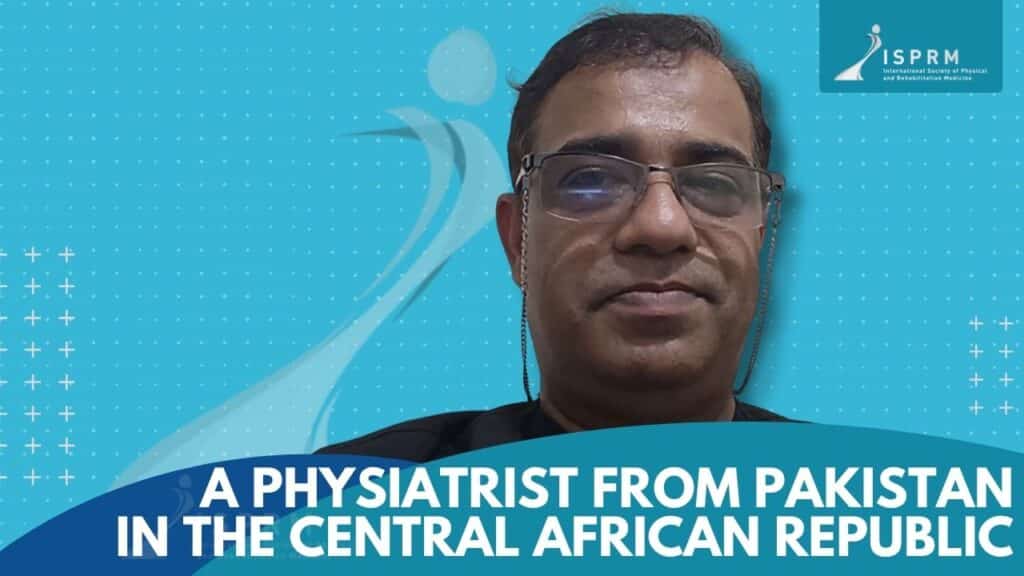
When United Nations missions deploy medical teams, the list usually starts with surgery, medicine and orthopaedics. Rehabilitation is often missing. If it is present, it is usually limited to physiotherapy. Dr. Ali Raza, a Physical and Rehabilitation Medicine (PRM) physician from Pakistan and a member of ISPRM, wants to change that.
For the past year, Dr. Raza has worked as a rehabilitation specialist at a UN Level 2 field hospital in Bangui, the capital of the Central African Republic. In a conversation with Dr. Abena Tannor, PRM physician working in Ghana, he described what he sees as one of the first inclusions of a PRM specialist in a UN mission.
A PRM physician in a field hospital
The hospital brings together several specialties, including orthopaedics, general surgery, obstetrics and gynaecology, internal medicine and psychiatry, with laboratory and radiology support. Dr. Raza runs an outpatient rehabilitation clinic, works with orthopaedic colleagues on inpatients, and uses musculoskeletal ultrasound to guide pain interventions.
The needs are wide. He sees disability linked to conflict, violence and road traffic injuries, and loss of function and fatigue after infectious diseases. Musculoskeletal pain in the back, neck, knee and ankle is very common, both among people living in the region and among UN staff, where heavy workloads, stress and poor workplace ergonomics play a role. Alongside clinical care, Dr. Raza has trained local staff in the basics of rehabilitation.
Why missions need PRM physicians
For Dr. Raza, the argument is about coordination. Physiotherapy, orthotics and psychological services are essential, he explains, but a PRM physician sees the person’s functioning as a whole. That means making sure services are well used, staff are trained, pain is managed, and people can return to their work and daily lives. He calls on troop-contributing countries to include their PRM physicians in missions worldwide. He adds that these physicians could also support community-based rehabilitation programmes in the areas they serve.
Challenges on the ground
The biggest challenge, he says, is the absence of a complete rehabilitation service under one roof, with physicians, a full team, basic equipment and outreach to remote areas. Awareness of rehabilitation medicine is low in the region. He believes change requires stakeholders, including WHO and national authorities, to work together: introducing rehabilitation into medical and technical training, connecting existing professionals such as physiotherapists, occupational therapists, orthotists and psychologists, and mobilising PRM specialists from neighbouring countries through visits and regional networks.
A message for Africa
Dr. Raza’s closing message is addressed to the continent. He encourages countries to work together to bring PRM forward, with medical schools and tertiary hospitals taking the lead and supporting their neighbours. Wherever there are medical facilities, he says, rehabilitation medicine should develop in parallel.
His experience reflects a principle ISPRM shares with the World Health Organization’s Rehabilitation 2030 initiative: rehabilitation is an essential health service, including in humanitarian and emergency settings.
ISPRM thanks Dr. Ali Raza for his service and Dr. Abena Tannor for leading this conversation.
Watch the full interview:
Responses