
Moving from Response to Readiness: Pete Skelton on Integrating Rehabilitation into Disaster Preparedness

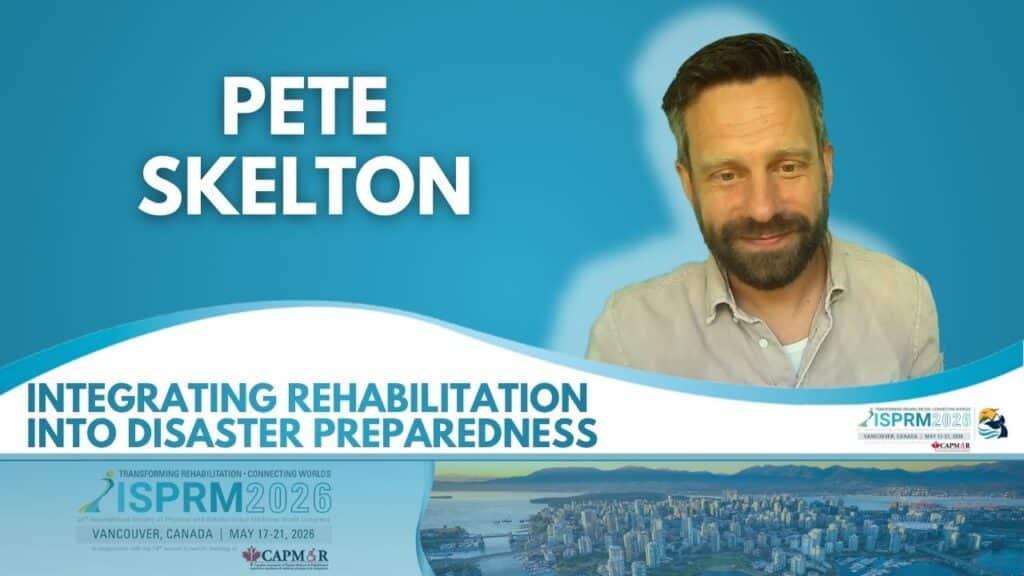
As the global medical community prepares to gather at the ISPRM 2026 World Congress in Vancouver, the crucial topic of disaster management is taking center stage. Dr. Maria Paul, secretary for the Emergency Rehab Committee of ISPRM, recently interviewed Pete Skelton, the World Health Organization (WHO) lead for rehabilitation in emergencies, to preview his upcoming keynote address. The core focus of his session will be the urgent need to integrate rehabilitation into disaster preparedness.
Globally, healthcare systems face growing challenges from disasters, conflicts, and outbreaks. While there is strong recognition that rehabilitation is a key component of an effective response, the fundamental problem remains that the field is not yet an integral part of emergency preparedness. Pete Skelton notes that when an emergency hits without prior preparation, there is often a dangerous lag in the first few days. Even though people recognize the importance of rehabilitation, the lack of immediate, coordinated action leads to losing patients to follow-up, which ultimately compromises patient outcomes.
To bridge this gap, the WHO is launching a new toolkit that walks rehabilitation professionals and leadership step by step through integrating themselves into national emergency preparedness. The framework covers multiple levels, beginning with personal preparedness for highly vulnerable people, such as those with spinal cord or brain injuries. It also addresses facility preparedness, ensuring that clinics can withstand emergencies and safely evacuate staff and patients. Finally, it emphasizes the importance of integrating rehabilitation into the overall health system approach, ensuring that national leadership is established and all actors are coordinated before a crisis occurs. Attendees in Vancouver will have the unique opportunity to learn how this proactive approach will lead to more efficient responses and better care for the most vulnerable populations.
Responses