
ISPRM Spasticity SIG Highlights at ISPRM25 Marrakesh

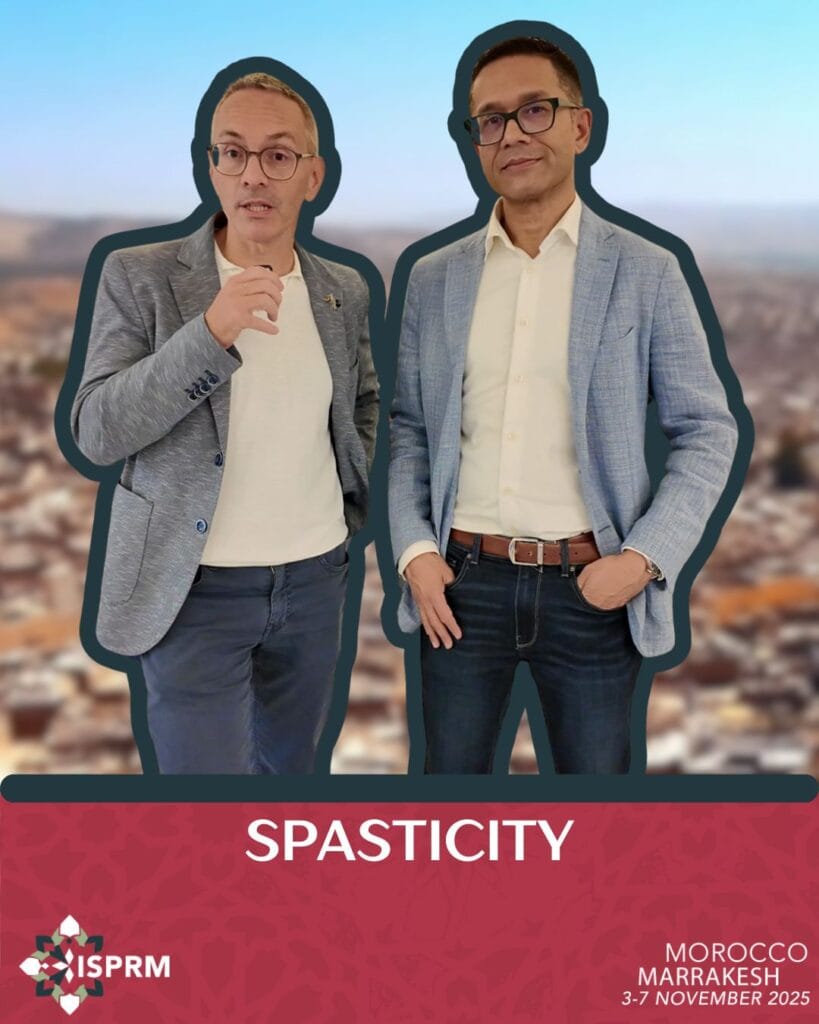
At the ISPRM25 Congress in Marrakesh, the ISPRM Spasticity Special Interest Group shared key updates on its recent progress and upcoming initiatives. Dr. Rajiv Reebye and Dr. Stefano Carda summarized the group’s achievements since its launch and outlined the next steps planned for the coming months.
Dr. Reebye described the rapid growth of the SIG since it was established in June 2024: «we started our group in June 2024 after ISPRM Sydney, and we have grown to approximately 125 members from 35 countries» .
He highlighted the completion of the ABCD and E components of the SIG’s educational programme, developed in collaboration with Indonesian colleagues from PERDOSRI: «we have completed the ABCD program and the E… piloted with our Indonesian friends from PERDOSRI… with certification now for participation from the ISPRM and collaboration with PERDOSRI» .
This programme will now support “train the trainer” activities across Indonesia, with future potential adaptation to other regions.
From the research perspective, Dr. Carda reported ongoing work to publish findings from the training initiative: «We are now trying to publish the results of this training with the metric that we collected during the four webinars and onsite training» . He emphasized that another priority is to empower Indonesian colleagues to publish independently and develop their own scientific track record.
The SIG also announced a new initiative:
«we’re starting a ISPRM special interest group, spasticity group journal club… every 2 to 3 months, starting in February» .
The first session will be chaired by Professor Anand Pandyan and will feature key papers such as the original modified Ashworth and Tardieu articles, presented in a point–counterpoint format.
Finally, Dr. Reebye shared plans for a joint educational activity:
«a very important collaboration between the pain special interest group of ISPRM and our group to do a webinar… to look at the similarities between chronic neuropathic pain and spasticity pain» with Professor Jörg Wissel and Professor Imamura as speakers .
These updates reflect the Spasticity SIG’s ongoing commitment to education, research advancement, publication, and international collaboration within the ISPRM community.
Responses