
A Global Vision for Mentorship in Rehabilitation Medicine

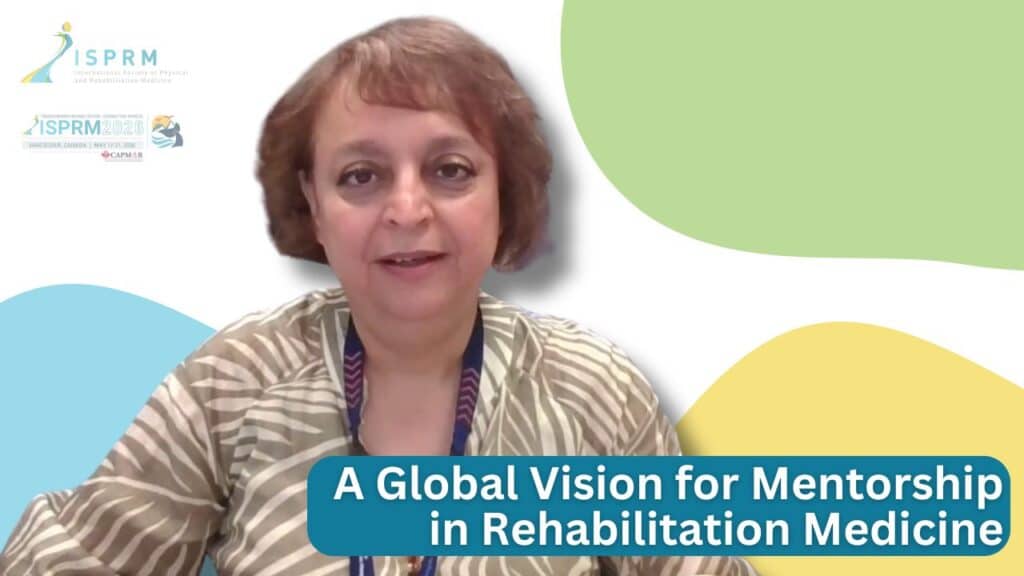
Prof. Fary Khan, ISPRM President-Elect, outlines a new structured initiative to strengthen the global PRM workforce
As the International Society of Physical and Rehabilitation Medicine (ISPRM) enters a new year of strategic development, its President-Elect, Prof. Fary Khan, has presented an ambitious proposal aimed at one of the most critical enablers of sustainable growth in the field: mentorship.
Speaking from Melbourne, Professor Khan introduced an initiative currently under consideration by the ISPRM Presidential Cabinet, namely the establishment of a Global Mentorship Task Force. The proposal builds on feedback gathered during the ISPRM World Congress in Marrakesh and responds directly to challenges identified by trainees and early- to mid-career physicians across all WHO regions, particularly in low- and middle-income countries.
From feedback to strategy
The idea emerged following a well-attended workshop in Marrakesh, organized by the ISPRM Communications Committee, which explored real-world barriers faced by mentors and mentees within the Society. While the session confirmed strong interest and goodwill among members, it also highlighted structural gaps: uneven access to mentors, lack of formalized pathways, and limited regional ownership of mentorship processes.
These insights intersected with ISPRM’s recently revised mission and strategic pillars, which emphasize workforce development, capacity building, research competence, educational harmonization, advocacy, and strong operational governance. Within this framework, mentorship was identified as a cross-cutting mechanism capable of advancing academic excellence while promoting equity across regions.
A structured, regional, and accountable model
At the core of the proposal is a hub-and-spoke model, designed to ensure regional leadership and cultural appropriateness. Rather than relying on a centralized, one-size-fits-all approach, mentorship activities would be coordinated within WHO regions, allowing mentors and mentees to be matched based on geography, culture, and professional context.
The envisioned task force would include a central chair, regional co-chairs representing each WHO region, and a defined governance structure with clear reporting lines to ISPRM leadership. Regular meetings and transparent oversight mechanisms would ensure alignment with the Society’s strategic framework and with broader global health priorities, including the WHO 2030 agenda.
Mentors and mentees: clear roles, clear commitments
A defining feature of the initiative is its emphasis on quality and accountability. Not all members would automatically become mentors; instead, mentors would be selected based on experience, ethical standards, and cultural competence, with specific training requirements outlined. Similarly, mentees would enter the program through a structured application process and commit to a defined mentorship period, typically around 12 months.
Each mentorship relationship would be guided by individualized learning plans, setting out goals related to clinical practice, research, leadership, or academic development. Progress would be monitored through mid-cycle and end-of-cycle evaluations, supported by key performance indicators designed to be rigorous but not burdensome.
Learning as a shared, global process
Digital platforms will play a central role in enabling the initiative, supporting webinars, online teaching, and open regional discussions. Importantly, the model is conceived as a two-way learning process: regional experiences and challenges would inform the central task force, allowing continuous refinement of the program.
The task force would also work horizontally with existing ISPRM committees and special interest groups, including education, communications, leadership, and international exchange, avoiding duplication and reinforcing a shared agenda.
Looking ahead
If approved by the Presidential Cabinet in the coming weeks, the Global Mentorship Task Force could be formally launched in the lead-up to the ISPRM World Congress in Vancouver. For Professor Khan, the initiative represents more than a new structure: it is a response to voices within the Society and an investment in the next generation of rehabilitation professionals worldwide.
By embedding mentorship into its long-term strategy, ISPRM signals a clear commitment to inclusive growth, regional empowerment, and the development of a resilient, globally connected rehabilitation workforce for the decade ahead.
Responses