
ISPRM President-Elect Fary Khan Shares Global Vision for the Future of Rehabilitation Medicine

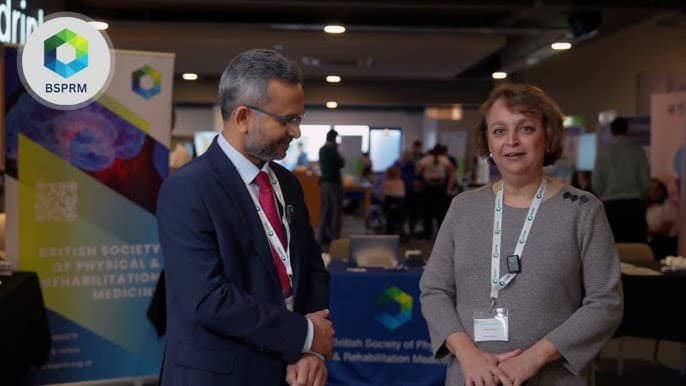
Professor Fary Khan, President-Elect of the International Society of Physical and Rehabilitation Medicine (ISPRM), recently participated in the British Society of Physical & Rehabilitation Medicine (BSPRM) annual conference. During her visit, she outlined her global vision for strengthening rehabilitation medicine and emphasized ISPRM’s pivotal role in advancing inclusion, equity, and innovation in the field.
Building Collaboration Across Borders
Prof. Khan expressed her appreciation for the warm welcome she received at the BSPRM meeting, praising the enthusiasm of younger consultants and trainees who are driving the mission of both societies.
She highlighted that the global need for rehabilitation remains immense and that closer collaboration among WHO, the UN Sustainable Development Goals, ISPRM, and national societies is vital to improving care for people with disabilities worldwide.
“ISPRM, as the parent organization, is here to support societies in working together and to strengthen rehabilitation as a value-added service,” she said.
ISPRM’s Strategic Priorities
As she prepares to assume the presidency, Prof. Khan identified several key priorities for ISPRM and its global community:
- Evidence-Based Practice (EBP)
ISPRM will continue promoting evidence-based rehabilitation across all member societies. Prof. Khan noted that regions such as Asia-Oceania face particularly high needs, offering opportunities for collaboration and research to build stronger evidence for rehabilitation outcomes. - Workforce Development and Equity
Addressing workforce shortages and inequities remains central. She emphasized the need to upskill rehabilitation professionals using WHO and ISPRM resources, underlining that “together we’re a force to reckon with.” - Harnessing Technology and AI
Prof. Khan believes that emerging technologies—especially artificial intelligence—will transform rehabilitation, enhancing service delivery and patient outcomes. - Advocacy and Policy Leadership
Following the World Health Assembly (WHA) Resolution on Rehabilitation (May 2023), ISPRM will continue to support member societies in advocating for the integration of rehabilitation within national health systems. - Global Support and Mentorship
Prof. Khan underscored ISPRM’s responsibility to empower developing and emerging societies, providing mentorship and resources to help them become active contributors to global rehabilitation.
Learning from the UK Model: The National Rehabilitation Centre
During her visit, Prof. Khan toured the new National Rehabilitation Centre (NRC) in Nottingham. She described the facility as “phenomenal” and praised its “hub and spoke” model of care, which integrates regional facilities to deliver comprehensive rehabilitation.
She commended the NRC’s approach to breaking down silos in service delivery, calling it a potential center of excellence that ISPRM could showcase internationally.
A Bright Future for Rehabilitation Medicine
Prof. Khan expressed strong optimism for the future of the specialty:
“The future of rehabilitation medicine is very bright. We no longer need to prove our worth—there is abundant evidence of how rehabilitation transforms lives.”
She referenced the 2023 WHO resolution as a milestone in global recognition, mandating that health systems worldwide embed rehabilitation into their core services.
With one in three to four people globally needing rehabilitation interventions, the specialty has never been more essential. As populations age and people live longer with complex conditions, rehabilitation medicine will remain central to improving function, independence, and quality of life.
Prof. Khan concluded with a message of unity:
“Our success depends on teamwork. We must continue advocating for our patients and for the specialty—together.”
Responses